Location
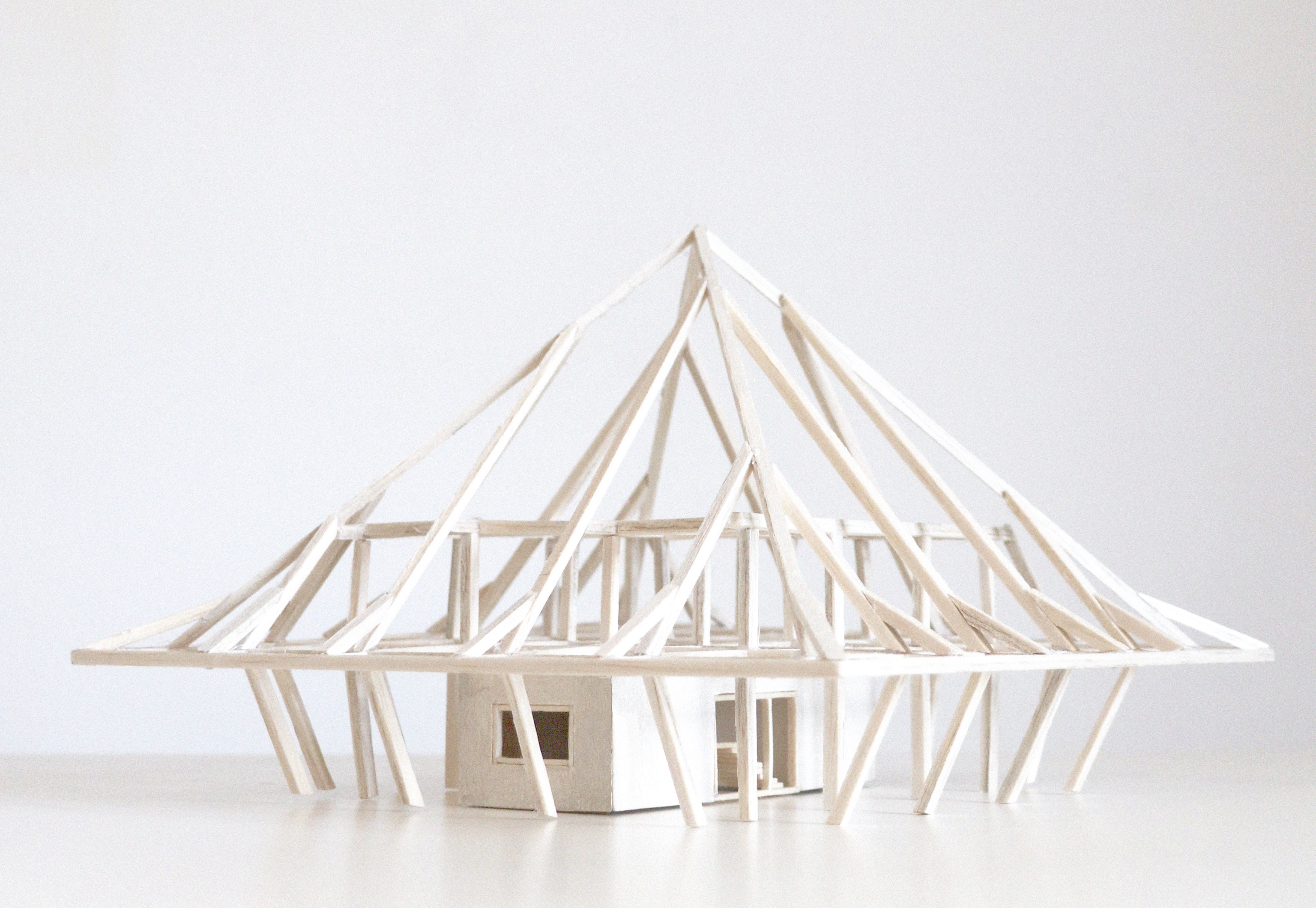
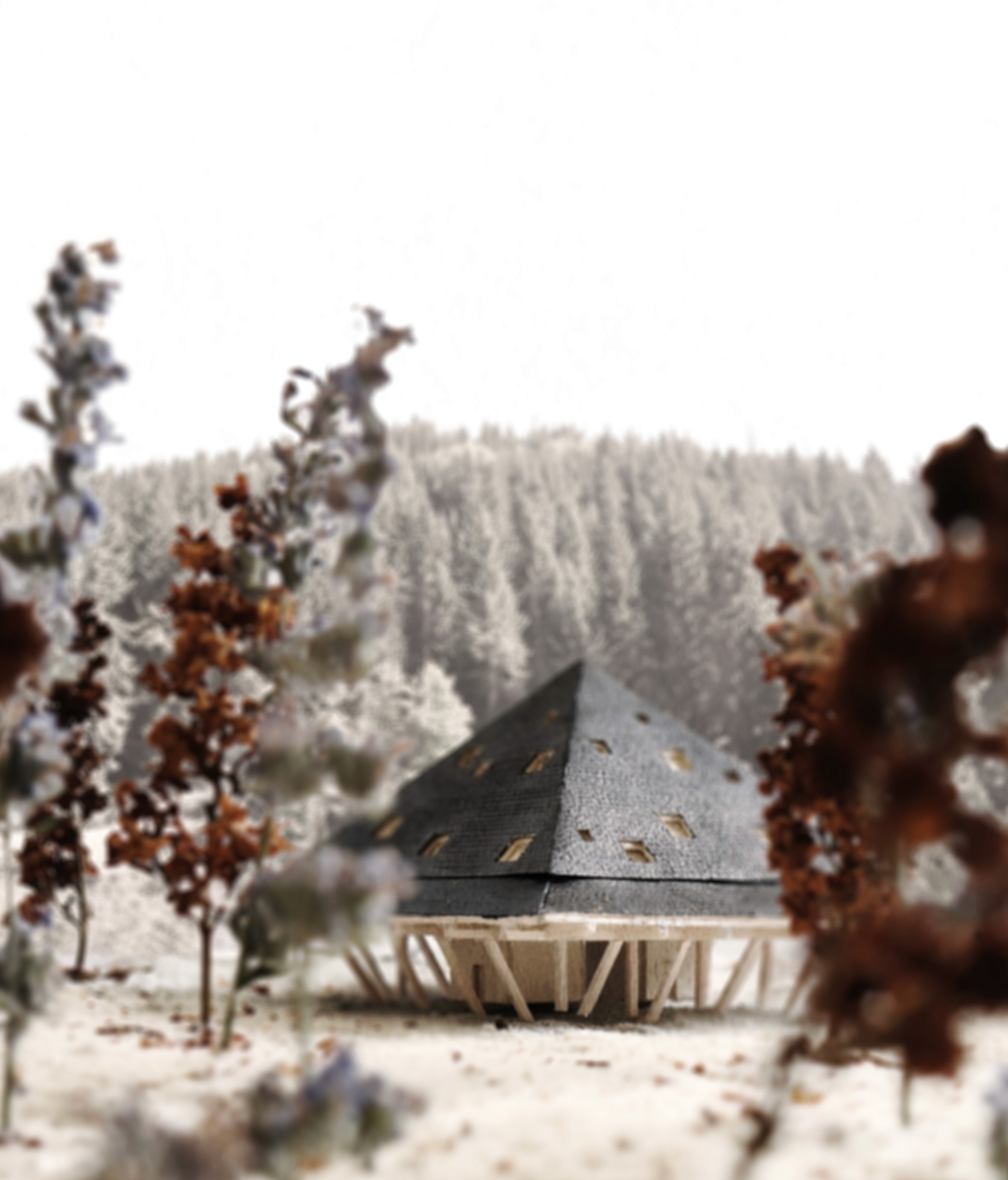
The main idea of the project is to design a place that provides a sense of security and meets basic human needs while integrating the shelter building as harmoniously as possible into the landscape. The design concept focuses on creating a space that exists in symbiosis with the surrounding nature, allowing users to fully experience and benefit from the local environment. The central theme of the project is the roof—as an archetype of shelter.
The Pursuit of Cohesive Forms – Architecture That Creates Community
In his book On the Construction of Architectural Form, Juliusz Żórawski writes: "The vertical, horizontal, right angle, square, circle, and sphere are not forms given to us externally, borrowed from nature, or acquired through long experience, but rather they seem to reside within our inner 'self,' as if they were created and conceived by humans, forming an inseparable part of us. The aesthetics of construction have extensively explored geometrization in an effort to discover the rules of beauty through this approach." The author seeks a form that is suited to people, emphasizing a tendency toward centralized, cohesive forms.
In the developed project, the roof has been designed as a cohesive form, symbolizing shelter, where all tourists can find refuge under one roof.
Regional Context as Inspiration
The regional architecture of the surrounding towns is highly diverse, with a strong emphasis on the roof as a dominant element of the building’s form. A distinctive feature of these roofs is the change in pitch within their geometry. In this project, I reference the local roof geometry and exaggerate it, turning it into a caricature. It becomes the central theme of the design.
Site Development Plan
The urban planning concept aimed to minimize interference with the existing surroundings while respecting its history. After conducting an analysis, a design decision was made to reconsider the proposed local development plan and discuss an alternative building location. This approach was taken to avoid the destruction of historic ruins and prevent the removal of trees in the area designated for the planned shelter. The building’s orientation was adapted to the existing tourist trails on the site. These paths pass beneath the roof of the building, making the shelter a natural stop along the hiking route.