Archeological garden | adaptation of ruins
Waverley Abbey, England
The main design task was to adapt the ruins into a place that would cultivate English gardens and function as a workshop and accommodation for visitors. The ruins are the remains of a Cistercian abbey in England, which was founded in 1128.
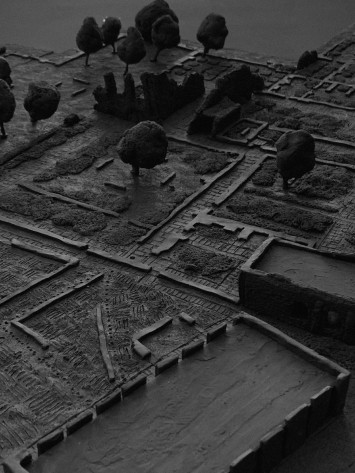
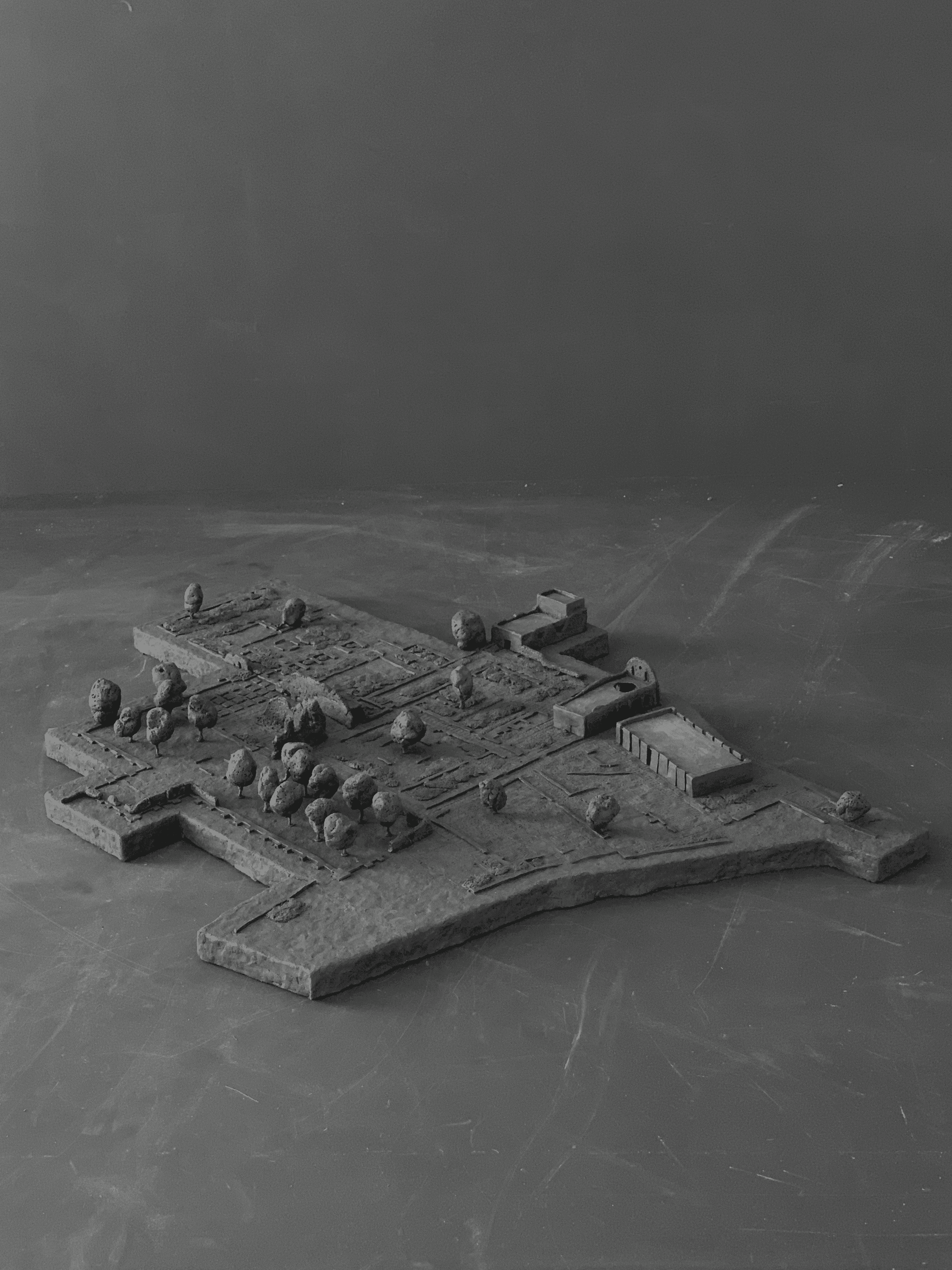
The plot area is very large and the ruins are set in an intact rural landscape. Unfortunately, there are relatively few ruins left, but there are no other elements for the visitor to imagine life there from over 800 years ago.The main assumption of the adaptation was to revive the spirit of this place by maximally preserving the current landscape and restoring the foundations of the ruins in the low walls, which would constitute various elements of the designed garden.
The garden was divided into five parts - a vegetable garden, a herb garden, a central garden, an English garden, a former cemetery with an avenue of trees. The project program includes a workshop-drying room, a Tea House next to the herb garden and a residential building in the former dormitory.
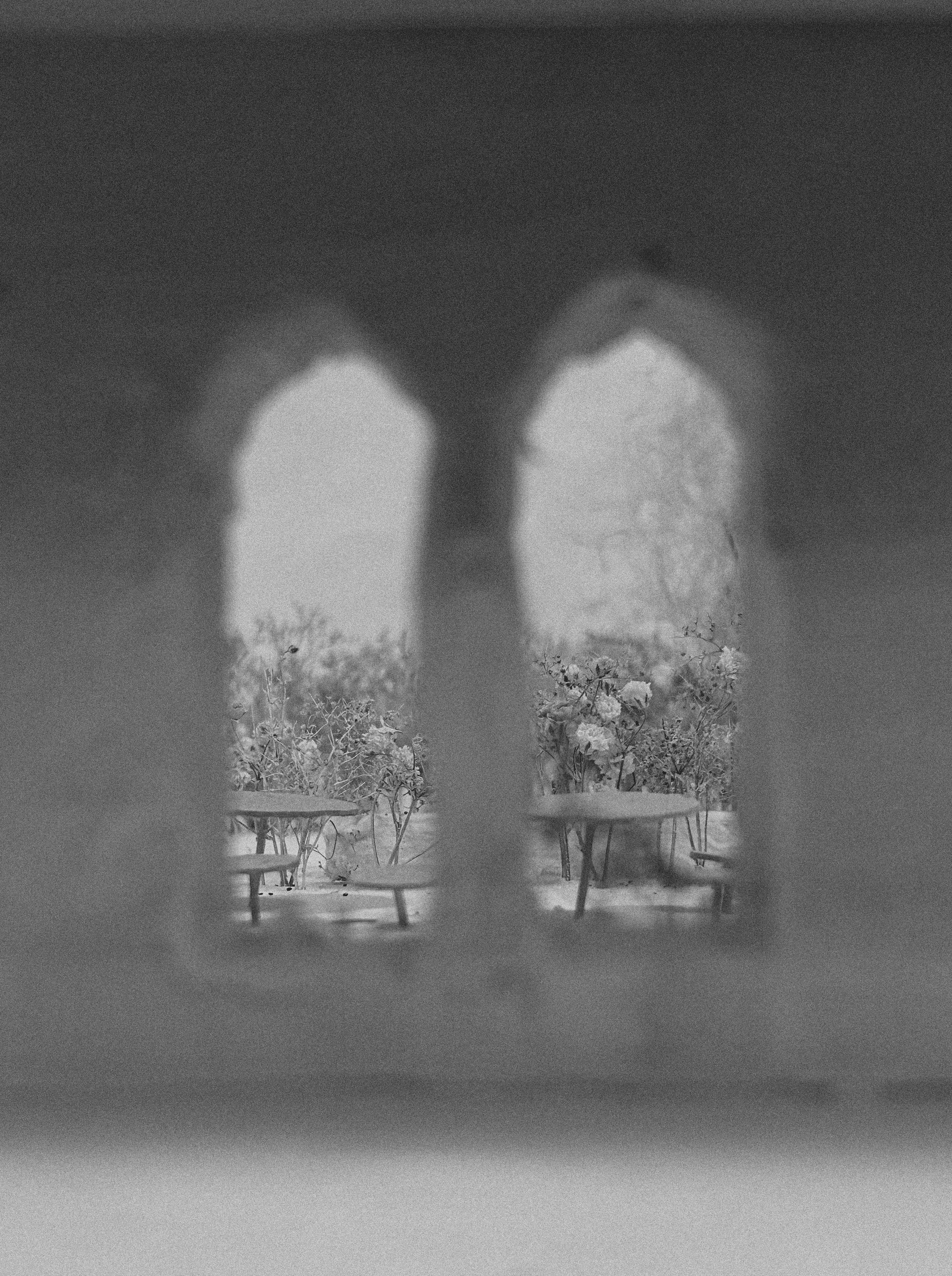
The entire project constitutes an archaeological garden, which, like in a secret garden, has many nooks and crannies and stories to discover.